Donnerstag, 8. Januar 2015
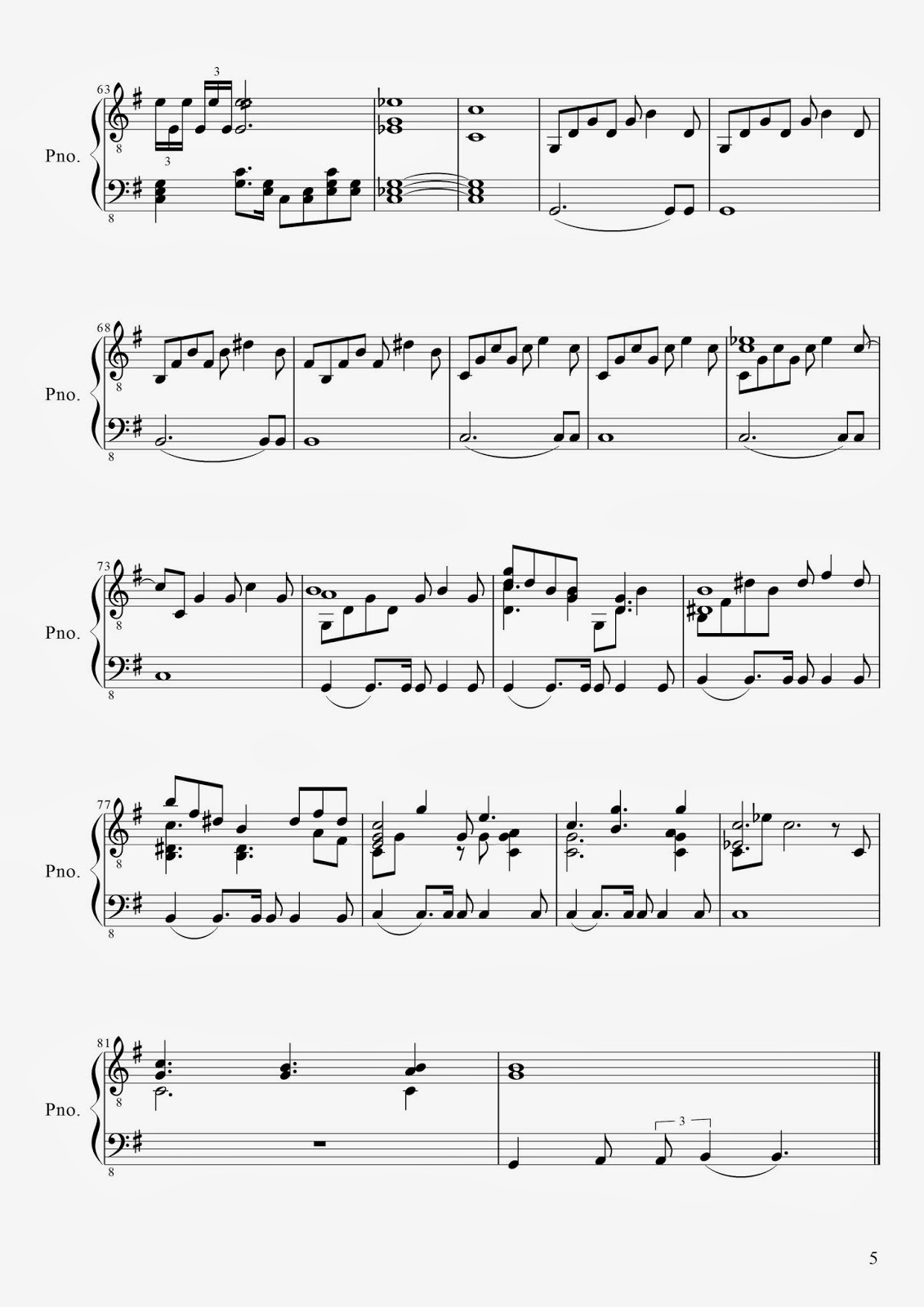
Ума2рман - Ночной Дозор
а ну-ка наколдуй мне: Forget all your superheroes – Anton Gorodetsky kicks their ass! If you have watched the European version of the Russian movie “Night Watch” you have unfortunately missed out on this amazing track which effectively summarizes the plot of the movie. Which is quite an achievement on the part of the band - I mean how many hip hop songs do you know that tell the plot of an entire movie? But I am getting ahead of myself.
I remember the day my father brought this album (V Gorode N) home after getting it from one of his students. When this song came on, I was at first extremely amused by the opening: The first lines seemed so awkward and disconnected from the rest, seemed so much like Russian hip hop trying to emulate other models that I couldn’t fight feeling it was slightly ridiculous. It felt as though I had just gotten into the groove of the song when it skipped onto something completely else, never to get back to the beginning again. Yet, my amusement soon gave way to awe, as the song went on and I realized how amazing hip hop in Russian sounded, especially this song with its falling speech melody at the end of each line (as I realize now, similar to Mexican rock/hip hop band Molotov’s song “Here We Kum”). I have long admired hip hop for its word craftsmanship and its awesome beats which tend to hit you directly into the oldest part of the brain. Yet I could never really warm up to most hip hop lyrics, for their sexism as one obvious reason, but also for the need to put down your competitors/opponents as something which is directly opposed to the ethos of punk music in which everyone can be a musician as long as he means it. Still I could not stop pondering the potential that hip hop held for really saying a lot in case an artist had a lot to say. Rage Against The Machine is certainly one band which realized hip hop’s potential in that sense, but this is not bad at all either. Umaturman’s mix of musical styles is truly admirable, and despite this being their only hip hop song as far as I know, it does not mean it lacks quality in any sense.
I did not know anything about the resourcefulness of these lyrics when I first heard the song since I understood exactly zero of it. By now they have been explained to me since, and I feel that the potential of hip hop lyrics has been realized in a way that satisfies my sense of musical economy: Telling an entire story – in this case the plot of a movie – appears as putting the lyrical potential of a hip hop song to good use.
Umaturman went on to enjoy a special place in my listening habits, particularly as the soundtrack of countless vacation car rides with my father. It’s hard to get tired of accomplished pop music so diverse and lovingly created – you have ballads, up-tempo tracks, reggae, Latin rhythms… you name it(, we got it). Still in all of it there is a sense of Russianness, if there can be such a thing. It is hard to pinpoint, but there seems to be some very abstract quality in the melodies which has written Russian all over it (just as I get the notion of something typically Japanese in the music of Japanese bands as diverse as The Alfee and Koji Kurumatani). Of course pop music was not invented in Russia, and neither was hip hop. Therefore if Russian artists appropriate these genres, they had better add something of their own, lest their music become derivative and cheesy like a cheap rip-off. However, there is a thin line between adding something of your own, and becoming a parody of yourself in your emphasis of your “own-ness”. We don’t want a Russian band that tries very hard to be Russian and in trying so hard ends up reinforcing clichés and becoming a parody of their own Russianness (for example if they started including balalaikas in their songs which would be the cheesiest way a rock band could emphasize Russianness). Fortunately, Umaturman don’t have to try hard. They seem to just write music that they like which they might think sounds similar to the models it is based on, but which for some reason turns out Russian. I suspect that it is the situation of living some place in Russia which as any other place has its unique soundscape – songs on the radio, music traditions etc. – for all their lives that determines the band’s musical grammar and logic, and at some point in the creation of music adds that certain unmistakable flavour.
Why do I like the Russianness in Umaturman’s music? It is no secret that Russia is getting a bad rap in Western media these days. Since I lack the necessary unbiased information, I am in no position to comment on politics in any way, but I am certainly in a position to say that I would never extend any possible political strife to the country, Russian people, and Russian culture. I have never been to Russia, but I suspect that as in any other country there would be friendly people, and some that I would not like at all, and if I lived there long enough I would become close to some people, have good and bad experiences, learn the language (better), and fall in love. I have met Russians outside of Russia, not least in my own house on a number of occasions, and my experiences have by and large been favorable. So listening to music with something Russian about it adds to the variety in life and widens the horizon. Mother Russia, do not suffer, I know you’re bold enough; I’ve been around the world and I have seen your love.
Labels:
hip hop,
piano cover,
piano tab,
russian,
score,
sheet music,
tabs,
Uma thurman,
Umaturman,
V Gorode N,
version,
В Городе N,
Ночной Дозор,
Ума2рман,
Уматурман
장기하와 얼굴들 - 그렇고 그런 사이
다시 한 번 말하겠지마는: I was first introduced to this song on an afternoon in Wonju during the early rainy season of 2010 by my then-girlfriend who called it an example of Korean indie rock. She outlined the lyrics’ content and pointed out that the “hand dance” in the video was amazing since the movements represented exactly what was happening in the lyrics. The consensus among most Koreans seems to be that Chang Kiha’s song writing is remarkable for its use of the Korean language. When I recognized the song coming out of a store in Seoul a few weeks later, the Korean friend I was with commented that Chang Kiha in his songs “spoke like a book”. Two years later when I discussed the band with my Korean tutor in England on the occasion of the band’s visit to London, he too called Chang Kiha a genius, pointing out that whereas most K-pop bands used Korean in a way that rather unnaturally made it sound like English, Chang Kiha had succeeded in adapting the idiosyncrasies of the Korean language to rock/pop music which seems to be something that even Koreans who are not particularly fond of the band give them credit for. I am not familiar enough with prior Korean rock or K-pop, or well-versed enough in the Korean language to assess the novelty of Chang Kiha’s writing. What I can tell is that his lyrics are extremely close to spoken-style Korean as opposed to written Korean, and frequently feature a vocabulary that tends towards the colloquial; for a number of the words I looked up, I realized I knew alternative Korean words which were the ones that are taught in language class. This is not to say that the vocabulary is eclectic or contrived, but just that Korean language frequently has a number of words meaning the same thing, and that Chang Kiha uses words which may be seen as not being the standard vocabulary, much like you would in a casual conversation. Some examples are ŏjŏkke, manyang and ttan te. This as well as the number of idioms used in the chorus and other places endows the song with a very Korean flavour that is almost impossible to capture in translation.
What I can comment more on is the music. All in all it can be best described with the words of a Chinese classmate upon seeing the lunch menu in the university cafeteria a couple of days ago (the lunch was a Korean take on Western food, including yoghurt, corn soup, bread with butter and jam, French fries and spaghetti, for those times when you need an extra generous helping of carbs): shingihan chohap (a wondrous combination). This song is a most shingihan chohap indeed: You have the somewhat cheesy, hurdy-gurdyish main keyboard figure with its folksy bass accompaniment, the main charm arising from the displacement of the three-beat figure in the keyboard against the four-beat meter across the space of two bars each. Then you have the abrupt breaks, the verse with its funky bass and the strange pick scrape sounds on the guitar, the unexpected shift from b flat minor to g minor (relative key to the parallel key b flat major) for the threatening and dramatic chromatics in the pre-chorus (James Bond theme says hi), and finally the return to cheesyness with the call and response in the chorus and the awkwardness of the spoken lyrics between the repetitions, growing ever more chaotic and increasing in rhythmic complexity as bass and drums add accents of their own. But maybe the shinghan chohap is the postmodern songwriter’s device of choice as he creates something like a musical collage and makes use of everything that is available to him. If we measure the quality of music with the question of how well it achieves to be what it is trying to be, this is certainly a very accomplished song in bringing something unlikely and refreshing to the table of the South Korean musical scene. Chang Kiha’s biggest achievement may then be in what he is trying to achieve – after listening to more of their music and also interviews with him, I believe he has a very authentic and interesting musical vision and the necessary confidence that sets him apart from those who are insecure in what they should be trying to be and end up being no more than derivative and generic.
This is probably the most difficult song arrangement I have made, mostly because of the verse and my determination to adapt the pick scrapes into a descending chromatic figure – since there is not much else going on in the instruments during the verses, omitting the pick scrapes is unfortunately not an option and I could not think of an easier way to adapt them to piano either. Despite creating some additional exercises and practising those parts Hanon-style for months, it has been a challenge to get a halfway decent take without major mistakes throughout the whole of the song (I don’t edit my videos). I am even more self-conscious knowing that whenever Koreans do anything in front of an audience, they will usually have perfected it. Yet there was a point when I felt I had to get this one out and move on to something else. Goes to show that all Europeans can do is copy Asians.
Mittwoch, 29. Oktober 2014
Misophone - Deluded And Obscene
I have so much I want to live for, but nothing I would die for: I concede that sometimes when I was practising this song in my university’s practise rooms, I felt awkward. That is because despite the fact that I am an independent spirit, and my university’s practise rooms belong to an ethnomusicology department where you would expect more open-minded people than the typical if-you-don’t-play-Rachmaninoff-you-are not-in-fact-playing-piano people running around in most music departments, I still realized that whoever heard me playing would inevitably wonder what the hell that barrel organ music was. If people hear you playing in a practise room, your music is most of the time invading whatever activity they are in the middle of, and tends to be accordingly unwelcome, so they will judge the music you play. I know it because I do it myself. Like last time when for the tenth day in a row, someone sat down to play the Amélie theme for an hour straight, and I thought “Enough already, move on to something else.” But despite the Amélie theme as a strong competitor, I am aware that there is probably not much that is lower in the practise room musical hierarchy than what I was playing with this song: A cheesy arrangement/cover song of an unknown song. So it’s a good thing that I am already 28 and I have learned to not care or think too much about what other people think. It is also a good thing that something like Youtube exists where unpopular stuff will only be found by the people who look for it. A year or more may go without anyone ever reading this, but when they do, it must be someone who is either a Misophone fan, or has liked some other arrangement I did and decided to check this one as well. Which is exactly the kind of audience I am doing this for.
This song is as much a 21st-century phenomenon as Misophone himself. Misophone stands for everything that is right with the music industry and what the revolution that is the internet really amounts to. Misophone, as I understand, is some random guy (or maybe two guys? Not sure) with a beard somewhere in the UK (Bristol maybe?) who writes tons of peculiar barrel organy music with loads of even stranger instruments some of which he builds himself and records all of this by himself in his presumably dimmed basement room; thanks to the internet, he has got some exposure on internet radio such as Last.fm where I first heard this song, and he has been able to get some of his music out on small labels where people such as me buy them (I have two of his albums). Although it has probably not made him rich nor will in the near future, it is much better than in the past when the chance of exposure for the music of a guy sitting in his basement would have been close to zero because live music was all the music there was (which I assume is impossible in Misophone’s case because of the many sometimes weird instruments appearing in a single song).
Misophone’s music works as a whole, that is with the titles, lyrics, album artwork etc. It is conceived as the music of a past – “the music of our grandparents” – and no matter how fictitious this past may be – indeed it undermines all specificity – it makes for a really interesting experience and takes me to a place I thoroughly enjoy.
Although transcribing this song took some time because of the thick texture of instruments, arranging it was rather straightforward and the arrangement isn’t too difficult. All in all I hear some percussion instrument, three violins, two guitars and a glockenspiel in this song; in my arrangement the left hand performs the task of maintaining the percussion’s triplet-feel rhythm, which is achieved by combining the long notes of the lowest violin with the chords that the acoustic guitar plays. The right hand is free to wander around and play the rest of the instruments, namely the long notes/melody in the other two violins, as well as the glockenspiel and the clean electric guitar wherever they appear. This was certainly a fun one, not least because of how much I like this song – maybe Misophone’s best among the ones I have heard.
Radiohead - Creep
whatever makes you happy:
Radiohead’s distancing themselves from this song is well-known (given that they even wrote another song, “My Iron Lung”, about how much they disliked it) and understandable: As a radio-friendly guitar rock song that unfolds its whiny lyrics full of teenage obsession over a plagiarized four-chord progression, it is hardly representative of what Radiohead's sound evolved into. It follows that in Radiohead's rare later performances of the song, the alienation on Thom Yorke’s face could not be more obvious.
Yet, the song has one of these glorious moments that let us catch a glimpse of later Radiohead’s trademark greatness: the bridge, a wonderful climax that integrates a meandering, fragile but powerful falsetto voice with some crisp drum fills and a contrasting melodic line in the shredding guitar style typical of Greenwood in his early days (which undoubtedly contributed to his sustained carpal tunnel problems). My interest in playing this song is owed to that bridge, to the challenge of having a shot at the falsetto and adapting the shredding guitar to the possibilities of the piano: It may sound like a made-up story, but during the days I was practicing Radiohead’s “Optimistic” with its falsetto chorus, one night I dreamed about playing this bridge, and in my dream the falsetto came out perfectly and it was all a powerful and cathartic experience. So I decided to give it a try, and eventually it turned out to be that passage that I find most enjoyable to play. There is something about singing falsetto that goes to the core; the feeling I have is of changing gear and switching to a steady pitch at full throttle. It may be similar to primal scream therapy in that there is something deeply liberating about falsetto, as opposed to chest voice which I find harder to domesticate and where I could never really go to the limit.
From a songwriting perspective, this song’s strength is its structure – it is a perfectly balanced pop-rock ballad: The basic chord progression which repeats throughout the whole song (as evidenced in the bass line) provides cohesion, the outbursts of the chorus strongly contrast with the subdued verses, the bridge unleashes a furious climax, and the coda functions as a sort of resigned acoustic afterthought. In my arrangement I have decided to leave the parts as intact as possible, save for the chorus where I had to take some decisions on chord voicing while maintaining the rhythm. As with all of my arrangements this creates some rather un-piano-like moments with big arpeggios and leaps, but maintains the sound of the original.
The opening remarks are not to say that this is not a good song lyric-wise; it is a perfect snapshot of a feeling that many people can relate to, of a time when you are looking for your place in the world, when you are fostering an obsessive, self-deprecating affection for someone you perceive to be perfect and above your league, and when you are pitying yourself for your misfortune. As perfectly as the song may encapsulate these feelings, there is an immaturity in all this typically associated with teenage years, and I guess this is where part of the uneasy relationship Radiohead has with this song comes from: Having outgrown their teenage anxieties they did no longer want to align themselves with and pander to the maladjustment and insecurity of younger audiences, especially when bigger issues of environment, government and society entered their radar. So while there is nothing wrong with “not belonging somewhere”, wallowing in self-pity and stylizing some girl into a sort of über-figure and savior is certainly not the way to go about it. As I sing this song, I cannot evoke the pathos I had when I was a teenager, but I try to sing it with a sincere respect for these feelings which seem a little ridiculous in retrospective, but feel very real when you are there. Today, although I still do not belong in most places, I do not give myself the benefit of blaming it on being a weirdo – even if you identify with this song, chances are you are not a weirdo either, despite what you think.
Sonntag, 26. Oktober 2014
Héroes Del Silencio - La Chispa Adecuada
estás en mi lista de promesas a olvidar: On a car ride in the summer of 2013, I mentioned working on this song to my Spanish ex sister-in-law, asking her whether she knew it. She wasn’t sure about this particular song, but remembered the band as one from her teenage years, “from that age when you suffer a lot, and nobody in the world understands you”. This surprised me in two ways: First, that she knew the band but not the song, since I had always somehow assumed that it was the their greatest hit (maybe from seeing it referenced on an online Latin rock forum). Second, I was surprised about the way she situated the band: I came across this song on internet radio, never heard many of their other songs, and so I did not have any reference, other than the music itself, as to what kind of band this was. Yet after watching the music video and listening to the lyrics more closely, I do understand where she comes from.
There are a handful of bands whose every song I know exactly because they were among my favorites at some point, but I also arrange and play songs by bands which I then only start to learn about as I practise: this is one of them. I cannot recall the title of a single other Héroes del Silencio track. Yet, this song popped up on the internet radio, presumably a Pandora station with a few Los Fabulosos Cadillacs tracks on the list, somehow caught my attention soon and became a favorite. It must have been the chorus that hooked me, and despite the many times I have listened to the song while transcribing it, it still is the chorus that gets me.
The song starts with an acoustic riff accompanied by what seem to be a subdued tabla beat and an occasional sitar strum, possibly a guitar with a sitar effect (the complete version has a short intro with the same “sitar” sound), adding a slight “Indian” flavor; this continues the tradition of hard rock bands who with disarming ingenuity appropriated something ethnic, long before questions of authenticity came into play. (Hint: The musical traditions of India do in fact not sound much like Héroes del Silencio at all). The rest of the band enters during the first chorus, at this point still without vocals, and afterwards verse and chorus repeat until the end, interspersed with a musically different interlude and outro. After transcribing the whole song, arranging it for piano did not pose any major difficulties except for the tabla beat. Especially during the intro and the first verse, the tabla is the only addition to the musical texture besides the guitar riff. Since there is no way of playing a tabla beat on the piano, I determined that, in my impression, what the beat mainly did was add accents on every second and fourth beat, and I decided to include these accents in the form of bass notes in the first and third verse (the tabla beat seems to rest during the second verse).
What is the deal with the chorus and its lyrics? The lyrics to most of the song can be said to be an effort at evocative imagery, or at least that is the way they seem to be intended. In fact, for most of the lyrics I could not say that knowing them has improved my experience of this song. While the images are evocative, they are not developed enough, but rather too disjointed and superficially dramatic to have any serious emotional impact. “In a coffin I preserve your touch, together with a crown of your shaggy hair, wanting to find an infinite rainbow” seems like gibberish somewhere at the intersection of where hippie meets goth. Although Héroes del Silencio fans won’t like me saying this, having Enrique Bunbury’s trademark but undeniably affected voice sing these particular lines does not exactly make it more convincing either. Fortunately, as the song continues, there are fragments here and there which seem much more heartfelt and authentic, first and foremost the chorus; although “I cannot distinguish between kisses and roots” seems like more of the previous hippie nonsense, the rest of the chorus comes closer to a stroke of genius: “I cannot distinguish the complicated from the simple/And now you are on my list of promises to forget/Anything bursts into flames when the proper spark is applied to it.” Now we are talking about something that speaks to the universal experience of the human condition. While a “list of promises to forget” seems pedantic, it is here used as a powerful image that gets across the intended meaning of “suffering because of the inability to forget a sentimental interest”. The connection to the following line is not entirely unambiguous, but it seems to relate to the speaker; unlikely though it may have seemed, it is him who has burst into flames, such was the nature of the spark that was applied to him. Funny as these lines might sound to some, especially when translated into English, they actually amount to a heartbreaking story as old as mankind; it is no accident that this story is sung over and over again since time immemorial.
Another musical highlight of the song coincides with what appears to me as the single most irritating and vaguely disgusting line of the song; I can’t seem to think of a context in which “white sperm running down the spinal column” would not be undesirable and out of place. However, in another stroke of genius, the line coincides with a subtle change of the bass note (replacing the root note with the third) that creates a downward stepwise motion, and in this particular place has an inexplicably powerful effect. In my experience, the resulting dramatic urgency strangely redeems the oddness of the line, as if endowing it with the notion of a deeper meaning that remains inaccessible to me; a truly unique effect of the combination of words/melody with the harmonic skeleton.
Ultimately, it is the video that most expressly proves correct the somewhat flippant statement from above, in that it has hippie written all over it, what with the Jim Morrison moves etc. Is that a problem? It technically isn’t, except for the fact that things hippie slightly bother me; in spite of a range of achievements and influence on the development of public thought and mores that the first hippie generation has to be given credit for, at this time and from where I stand, I have come to associate hippies with an irritating ingenuity (for their clear concept of the enemy), an amount of leisure reserved to upper class kids, and a degree of dogmatism that I am suspicious of in any context. Héroes del Silencio hardly belong to the first generation of hippie thought; still a good song.
Montag, 28. Oktober 2013
Plastilina Mosh - Millionaire
en las cosas que no llegan cuando esperas demás
This song which I first came across on internet radio invariably reminds me of the Latino community in the United States. To be sure, I can’t claim to be very familiar with it, given that I have never been to the United States and I have only ever met a handful of U.S. Latinos. But many years ago when I started my short-lived exploration of rock music internet forums, I was a member of a page called rockero.com, where I left comments on other forum members’ pages, added friends and even chatted sometimes, without many lasting impressions, given that I could hardly understand the mostly Mexican chat slang, so I spent my time trying to decipher answers like “sip”, “k peds” and “haber”. At this point I have met many Latinos and many Americans and I feel there is something tragic about the Latino community in the U.S. Sure, many of them may have a better life there economically, but if you have ever been to a Latin American country, you will know the sense of community and support structures that can be found in many of them and which are simply absent in the barren landscapes of the big "Western" cities. If you can empathize with both sides, you can understand how many Americans may misunderstand the Latino community and how many Latinos may feel unwanted in America which certainly amounts to a tragedy if you know anything about how Latinos are. This song reflects some of that, namely an indistinct hope for a better future, a day that never comes, becoming a millionaire one day. Going through some bleak times myself these days, living in one of the most expensive European metropolises somewhat against my will, for an indefinite time and with little enough money to exclude me from much that I used to take for granted during times in less absurdly expensive places, I understand exactly how it feels. What I like about this song is its light-hearted and tongue-in-cheek character; the rapping sounds off-the-cuff, close to normal speech, and the rhythm of the rapping blends well with the beat. In a way, it sounds like a Friday afternoon song, like a song for people who have a dull routine and need something to keep up their spirits, who are working towards a better future. But there are two weak points to this song: First, the video is pretty stupid. While I was transcribing this song, I must have watched it a hundred times and I still find it pretty stupid… they could have made more out of that. But far worse, it is never ever acceptable to rhyme “millionaire” with “Tony Blair”. Not only because the song rapidly loses actuality, but because the last thing I want to be reminded of when listening to light-hearted and fun Latino rock/rap is the memory of this American lapdog and terrible war-monger who is personally responsible for the deaths of thousands of people, and has single-handedly ruined a country, leaving it in the state in which I am forced to cope with it today.
Who would not want to be a millionaire? Probably no one you or I know, but probably everyone would be better off not becoming one, that is even a statistical fact. Research shows that people who do not lack the means for basic subsistence live happier lives than those who don’t, so up to a certain point, yes, you can say that people’s happiness increases proportionally to their wealth. But once you get past a point of being wealthy enough as not to have to worry about your subsistence, additional wealth does not equate to increased happiness, and I am absolutely certain that being a millionaire is already way past the point of meeting your basic needs. My problems and those of most people I know cannot really be solved with money. Surveys indicate that most people who describe themselves as happy point out that their happiness is owed to things such as family, friends, sex and sports, yet still most people have the erroneous belief that it will be money which ultimately affords them happiness. Living where I do nowadays, I occasionally catch myself increasingly subscribing to this view which is a surefire sign that I should get out of here as soon as I can.
Radiohead - Optimistic
this one just came out of the swamp
This song moves like a wall. It brings me back to one of my darkest times when I roamed the streets of a major South American city with misguided and a little naïve thoughts. It seems a representative song of Radiohead’s sound on Kid A – an album which I would argue is conceived as a whole more than any other and should be listened to in the original order. But then again, I know now that this may be only because it is the way I got used to listening to it. Maybe another order would be fine, but the songs on the album certainly seem to work as a whole (Amnesiac in comparison seems a lot more fragmented, albeit with great individual tracks). Together with its artwork, the bear hunts, pools of blood, mountains threateningly looming above post-apocalyptic snow plains, pockmarked by dots of fire. Das Theater des Todes, never pick up the phone, rather take the money & then run. If you want to understand the conceptual idea behind this album better, watch the so-called “blips” that can be found on Youtube and which were aired on TV as an advertisement for the album. I wish I had been a Radiohead fan already when this album was released and had been watching TV enough to come across one of their blips during advertisements one day. I imagine that it would leave a lasting impression on anyone.
From the outset, I have to concede a minor flaw: Just like Radiohead themselves seem to do when playing this song live, or, for that matter, in the “Basement”-version, my performance is sped up as compared to the album version. Which is a flaw because a lot of the song’s character lies in the menace of its slow plodding and pounding, relentless and inescapable. Having transcribed the whole song meticulously, it still holds some mysteries to me: One of them is the exact fingering of the characteristic guitar lick that Johnny enters with after the first chorus. I have watched the Basement-video repeatedly and experimented with different tunings and open strings, but what I see and what I hear don’t seem to match each other. It clearly appears that the lick is played by sweep picking the strings from highest to lowest, maintaining the same finger position without use of hammer-on or pull-offs, which does not match what I hear which is the unmistakable sound of the four highest steps in a D minor scale. The second mystery is what you could call “the song’s coda”, the part that on the album version that leads over to the next track “In Limbo”; I wish I could have been there when Radiohead decided why they wanted such a coda, why they wanted it to sound like it does and when they composed it. It sounds so … unconceivable, in the sense of “impossible to conceive”. It certainly works very well and provides a smooth transition, but seems so airy, at the same time marked by a dense drum rhythm, reminiscing the song’s main riff, cut half a bar short somewhere along the way, then suddenly dying away. I don’t think there is anything optimistic about this song; sure “the best you can is good enough” has become something of a motto for me in stressful situations, but I doubt that people would really find it uplifting in the context of this song. Rather, what this song, the album it is on, and most of Radiohead’s music transmit to me is resignation. At one point in my life I have lived a life of total immersion in resignation. It feels good for a while, sometimes I still enjoy it. It may just be the cross that my generation is carrying. Resignation provides us with an illusion of power, by seemingly giving us the option of withdrawal as a way out, as a way to refuse to make a choice. But in the end, we probably realize that the grapes were just hanging too high all along. Because it’s certain that resignation has never moved anyone to a different place. Resignation is stagnation. One day, I learned how to turn resignation into anger, anger into motivation and action, and from there things went uphill. For five years I have never let resignation gain a permanent foothold again. Maybe the learning experience about absolute resignation is that it can only get better from there. It’s a sort of nothing-left-to-lose scenario. And maybe the really sweet grapes were on the other side of the hill all along. All of this being said, I still love Radiohead for the mere quality of their music. And I don’t think all Radiohead listeners are living lives of resignation. Some, as me, may come in this way. Come for the resignation, stay for the music.
Abonnieren
Posts (Atom)